South China University of Technology · Guangzhou International Campus
Smart, Reliable and Interpretable Systems Laboratory

Smart, Reliable and Interpretable Systems Laboratory

The SRIS Laboratory focuses on interpretable fault diagnosis, neuro-symbolic reasoning, and safe intelligent control. By integrating physical knowledge, temporal logic, machine learning, and control theory, we develop engineering intelligent systems that are understandable, trustworthy, and verifiable. Our current projects emphasize industrial time-series and multimodal foundation models, neuro-symbolic intelligence, mechanism-informed interpretable fault diagnosis, verifiably safe learning-based control, and autonomous robotics. Welcome to join us.

News and laboratory highlights

Latest news and activities

All news
01

Laboratory activities

Loading gallery data…
02

Latest research updates

Loading news data…
Core research directions

What the laboratory studies

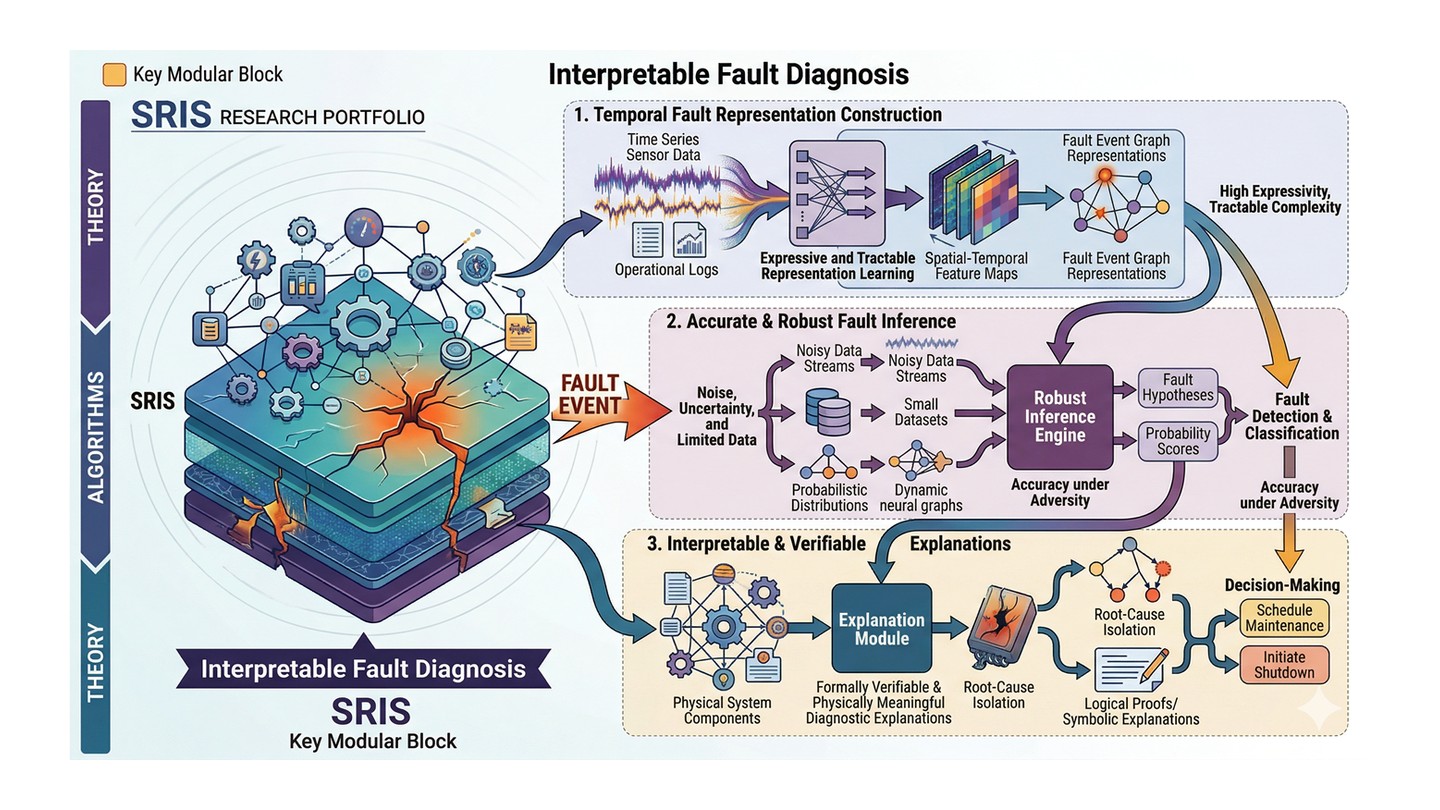
Research framework for mechanism-interpretable fault diagnosis

We convert heterogeneous engineering measurements into physically meaningful fault evidence, mechanism-consistent explanations, and credible health decisions under variable operating conditions.

  1. 01How can invariant fault evidence be recovered from nonstationary measurements?
  2. 02How can local symptoms be connected to mechanisms and root causes?
  3. 03When should a diagnostic conclusion be trusted and acted upon?
Research directions
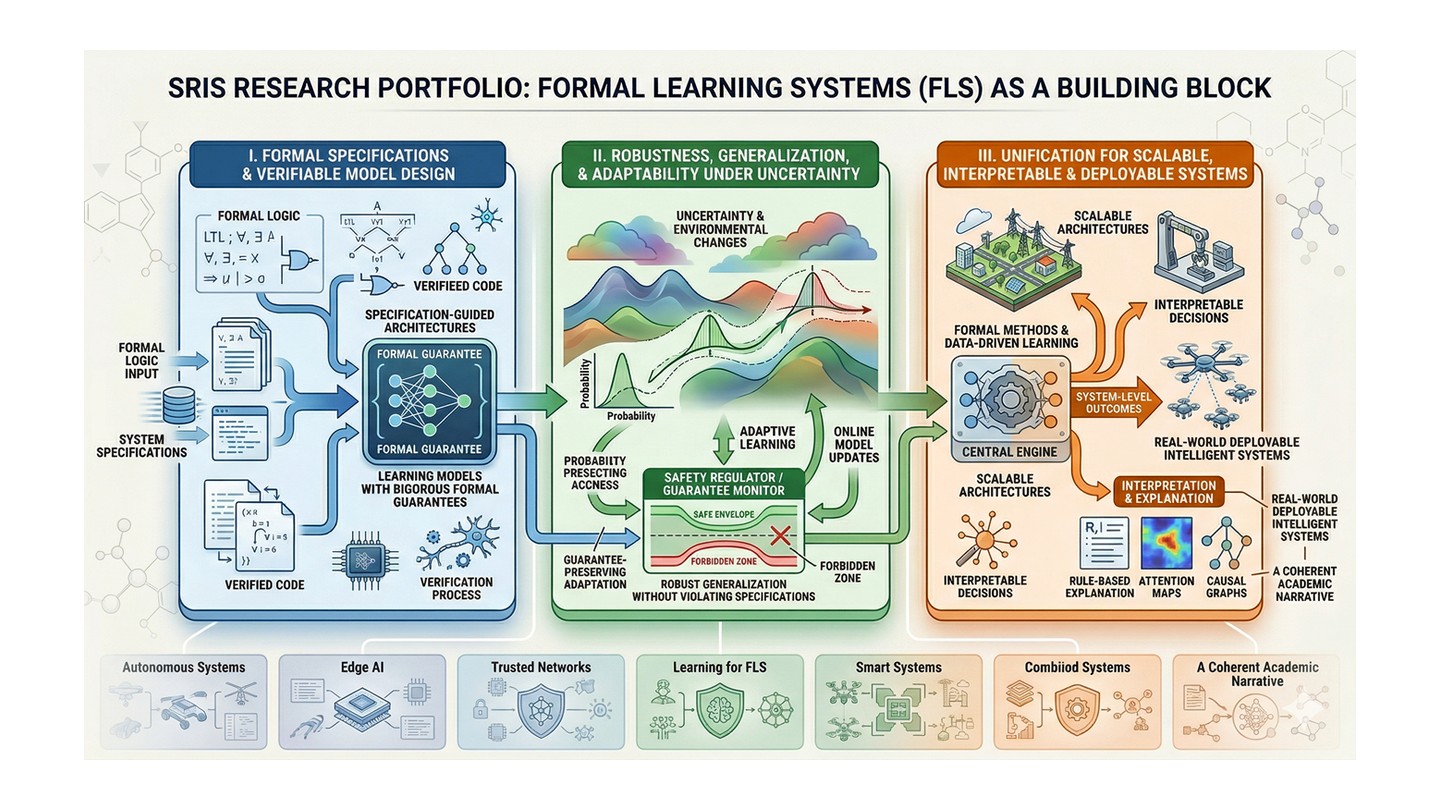
Research framework for formal learning and neuro-symbolic reasoning

We learn explicit temporal, causal, and logical structures from data so that model decisions can be interpreted, checked, revised, and reused as formal knowledge.

  1. 01How can discrete symbolic structure and continuous parameters be learned jointly?
  2. 02How can learned symbols be grounded in physical and temporal evidence?
  3. 03How can formal knowledge remain valid under uncertainty and distribution shift?
Research directions
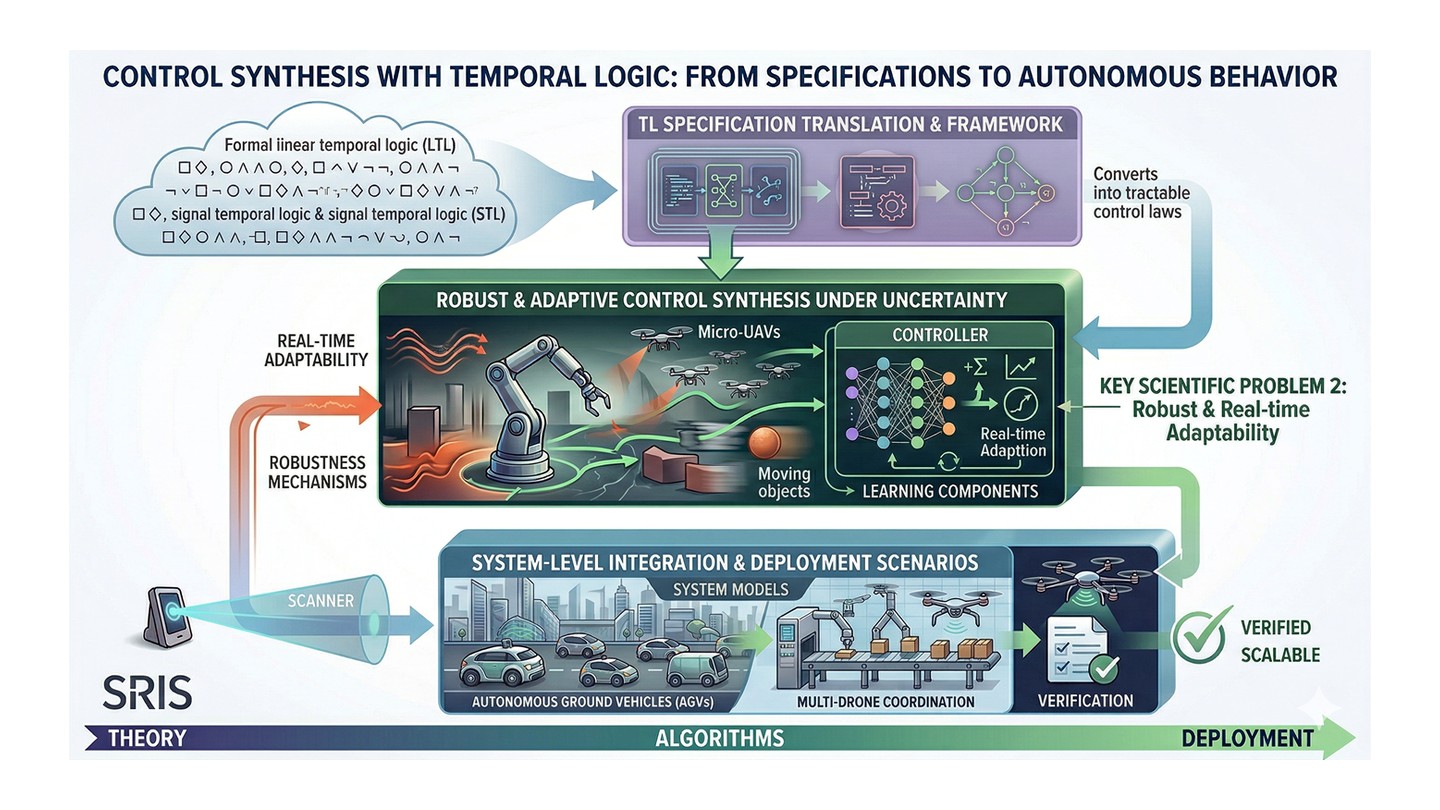
Research framework for temporal-logic-guided safe control

We develop learning-enhanced planning and feedback control methods that satisfy explicit temporal tasks, safety constraints, robustness requirements, and human-interaction objectives.

  1. 01How can temporal tasks and human intent be translated into feedback constraints?
  2. 02How can learning improve performance without violating safety and feasibility?
  3. 03How can autonomous decision-making scale to complex interactive systems?
Research directions
Methodological framework

From measurable evidence to verifiable action

  1. 01Evidence

    Vibration, force, vision, events, physical models, and operational context

  2. 02Representation

    Time-frequency structure, causal graphs, and temporal-logic formulas

  3. 03Inference

    Structured neural learning, robust optimisation, and uncertainty-aware reasoning

  4. 04Action

    Diagnosis, maintenance decisions, motion planning, and safe feedback control

Research output

Publications and academic record

Publications
—
Listed publications
—
Journal papers
—
Conference papers
—
Publication years
Loading publication data…